Showing posts with label vermicomposting. Show all posts

20 September 2023

some stuff

I was going to call this post "all the squirmy wormies" but then started writing about more than just the worms, so. 

I realized that along with a bit of houseplant and fish tank neglect, I had been ignoring my worms lately, too. Had not fed them in a long while. Which actually made emptying the bin easier- they had been comsuming their bedding so really there was only a layer of carboard chips on the top to remove, the rest was mostly finished vermicompost. I didn't sort out the worms and unfinished bits by shaking through a handmade sifter like usual- the bottom two-thirds of the bin was too damp, and very compacted. 

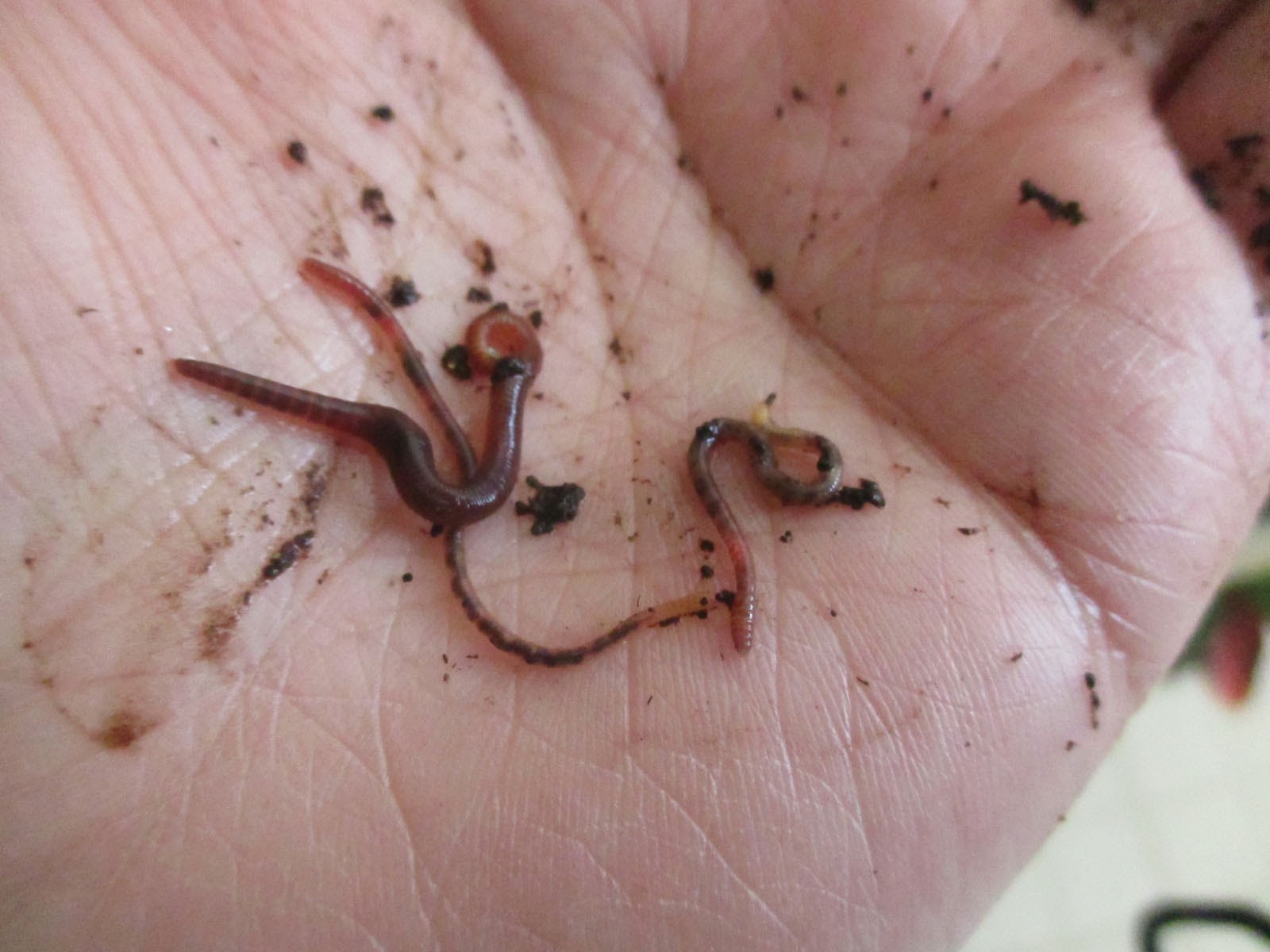
Instead I loosened it up by hand and then picked out the bits of still-recognizable cardboard, and the individual worms that hadn't been in the first handfuls out of the feeding corner, or off the top layer. It was just a few hours, over two days, spent sitting by the bin carefully going through it. I didn't see any worm eggs. but there were plenty of tiny baby worms, so they've been breeding not so long ago. Worms in my hand.
Some are yellowish, but not too many. None of the worms felt tacky, they all had good moisture and most are healthy pink. I did notice lately it had been drier, so at that point I had sprinkled in some water, and started feeding them again hoping they'd all move to that corner. It never works completely, there's always more worms to pick out of the rest of the bin. I'm sure if I just kept the ones scooped out of the top layer and food area, that's plenty to keep the population going. But I still feel like "rescuing" as many as I can, knowing those that get thrown out with the vermicompost to fertilize the lawn and garden, will just die overwinter.
These tiny millipedes were in the bin. More than I've ever seen before, and I found a pile of dried-up ones off to one side behind the bin- has a spider been eating them there? They curl up in little silvery spirals. Picking worms individually out of the bin allowed me to leave behind most of the millipedes to get tossed out into the yard. I hope.
Then I started trying to get some plants in better shape. Groomed a bunch of houseplants, and those on the deck. Trimmed back some of the geraniums that had got leggy, and replanted the cut stems.
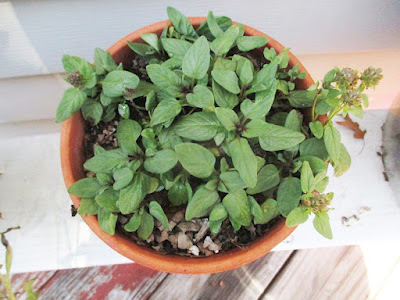
Sprayed with soapy water/oil the ones that seem to still have bug problems: chocolate mint, ginger mint, stevia, the cuban oregano- 
whose leaves are all so small right now I feel it must be suffering
I went to pick out this dead leaf that had drifted into my basil plant- and noticed somebody was on it
a little mantis!
This plant that's still new to me, the self-heal, is starting to bloom-
Another pic of my fish today- I think I should add to his name: Tucker Firetail

29 October 2020

some compost notes

Mainly, that I tossed two houseplants in the bin. That haven't done well for a long time now. A very sad striped spider plant
and the little pilea which withered to near nothing. I don't know where I went wrong with these two, but if I try again will be with a new, healthier plant. Don't think I can bring them back from this.
Also, when turning my worm bin last week I couldn't help noticing a lot of the worms were pale and lethargic. The bin had dried out a bit and not been fed in a while. I'm sure the population will bounce back now that I've refreshed their bedding, moistened it, and am trying to feed more regularly. But when I saw someone nearby was giving away worms from her vermicompost bin to downsize, I thought it a good chance to boost my own. So I got some. She had four or five large plastic bins going. Gave me two good-sized scoops of worms (with bedding/foodstuff mixed in). May the red wigglers be happy and find new companions here.

21 May 2020

compost surprise!

Today main task was emptying my worm bin, to mix the vermicompost with ashes for the lawn and move the worms into new fresh bedding. I've neglected them somewhat of late. The bin got too dry, I forgot to feed them for a while, then poured and mixed some water in but it was too much. Left the lid off for a while but the bottom was still very dense and too wet. Mistakes. Anyway, it's all freshened up now. Enough of the worms are still alive, though many feel tacky, are yellowish and act listless (like they always do when it's waaay time to refresh the bin).
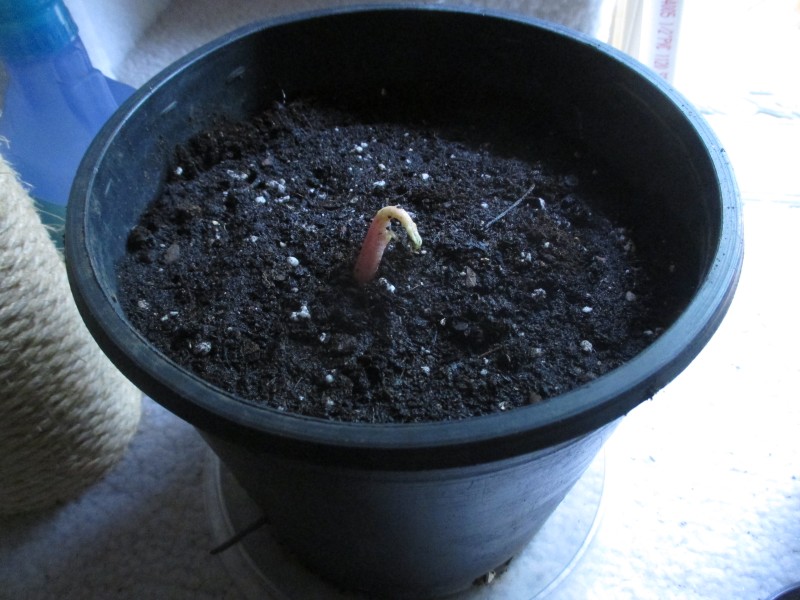
But here's the surprise. A sprout, deep in the lower half of the bin. I pulled on it and it was far thicker and tougher than anything yet sprouted in there (lots of seeds often sprout). It's a mango!!
Several times before I tried to sprout a mango from the pit of one we ate, and it didn't work. Just molded. Well this one did so all by itself. And then I found another!
split the husk off them, because I thought it would just rot in a pot, and good thing too as I found a few worms inside each one. Returned them to the new bin.
Planted each sprouted mango seed. I was nearly out of potting soil though, so without regrets upended some other pots. A dead sweet potato vine and three small jade plants went into the compost. A small pot of recently-rooted zebrina and another of pothos got pulled and tucked into older pots of the same plant. Here's my planted mangoes!
Don't look like much yet but I'm excited and hope to get a cool houseplants out of them.

17 January 2019

few notes

I realized the ferts I'm using for my tenner is a standard all-in-one, formulated for shrimp (which seems to just leave out copper). The same company makes another version specifically for low-tech tanks. Although this bottle has instructions on the back how much to dose for low-tech, I wondered if I it was too much. Maybe I should dose a bit less, even up to half the recommended amount? or do lighter water changes, instead of the 50% it's had for a long time? Making a conservative change, last week I dosed 3.5 ml of the ferts, whereas the usual was 4 ml. And what do you know- I think the plants look subtly improved at the end of the week- leaves on buce isabella are wider, richer in color, upper foliage on the rotala stems greener and some even have a tint of red. Today I did the same- fifty percent wc and then 3.5 ml of ferts dose. Short while later I saw some leaves on windelov pearling. The plant that's been doing shabby a while now. I'm going to keep with this for a few more weeks, maybe cut back another half ml, see how it goes. Pleased to think my windelov might not die after all!

Some more plants came loose in my 45 again, from where they were tied down- one of the smaller anubias, two buce 'brownie ghost', a buce 'green wavy', a vallisneria uprooted. I'll have a bit of replanting tying to do again on maint day- which stresses out the angel. He's very chill now when I walk in the hall or move around the tank, but doing work inside the tank or lifting up driftwood pieces still freaks him out.

The four new tetras still look great in QT. I can't wait to move them in and finally take down that extra tank.

Window tank is- a bit murky. Paradise fishes look better- I'm still feeding them lightly. Tank glass got a lot more soft brown algae this week- not sure why. Maybe because I fed Perry and Lady several red wigglers that showed up from my boston fern? I have the pot on old pot shards over tray of water, and mist it every other day, but not actually watering the soil much. Some worms began emerging out of the dry soil and swimming around in the tray- seeking moisture. I rinsed them off and gave to the paradise fishes, but neglected to 'clean' the worms out- I used to keep them overnight in a container so they'd void a lot first. I didn't this time, and perhaps it added too much organics to the tank- paradise fishes seem fine but there is definitely more algae, water looks a bit tinted, and some film on the surface. Cleaned the glass today, rubbed some algae off leaves. I did feed them worms two or three times- one each- so . . . oops.

11 November 2018

leaf collection

I'm gathering white oak leaves for use in my aquariums.
Slightly different method now. Instead of bagging all leaves up in huge numbers and sorting out the ones I actually want to use months later- when most have to be discarded because they got damp and decayed or bugs in them- I'm picking them up individually by hand the day after they fall off the trees. When it's not raining.  I think it will still be plenty- I haven't yet used up all the leaves I saved last year (too many!).
I'm also raking more frequently- every two or three days to keep the grass clear and the leaf mulch pile manageable. Meaning, if I wait until the yard is very thickly littered, then I can't fit it all in the bin because the leaves are bulky while fresh. If I add them frequently, the ones near the bottom start breaking down, compacting, and I can keep adding on top as long as it's not a ton at once. So far it's working well. I hope to have less bags of leaves stored under the deck, and more composted leaf mold to use next spring/fall. Can see the stuff in process already- the darker layers of leaves in the lower half of the pile are already on their way to becoming garden riches.

I also hope that by keeping my yard raked up constantly, the grass gets stronger from having more sun exposure while it is still growing and making food for itself in fall. I noticed this season that I didn't have much of that tiny-leaved, wiry stemmed weed in my front or back lawn (I think it's lespedeza) and it's almost completely disappeared! some other weeds are much diminished in numbers, too, especially in the front. Which is where I spread all my fireplace ashes. I am definitely keeping up that routine: worm compost scattered in fall, ashes raked in for springtime.

17 January 2018

worm check = fish food

I saw a few worms made a break for it and died on the floor near the bin. So delved in (gloved hands make this easier) to see how they're doing. Turned up and loosened some compacted bedding from the bottom, but for the most part it was in good condition, damp enough, no awful smells. The worms are slow, but have good color and their skins nicely moist. I think they were just too cold. I put another layer of cardboard between them and the outside house wall. And picked out this small handful for the fishes.
Worms are getting less food lately because I am getting more picky about what goes in the bin- any onion skins or citrus peels of course have to be set aside for outdoor compost. No heaps of broccoli or cabbage trimmings either- that stinks. The kids are good about putting food scraps in the collection container, but I only ask them to remember no meat or cheese, so often there's orange peel mixed in and instead of picking it out I just toss all into the outside bin. Which means the worms eat leaner. I don't think they're as active in the winter now, anyway.

To clean them for fish food, I do several rinses in tank water. The first to remove compost bits. Then let them sit in a shallow container - one that has a raised center, they can crawl out onto the island if really make an effort- and check it once or twice a day. If they've extruded some waste, I dump the water out and replace, until it stays mostly clean.
The fishes have no idea what goodness is coming to them tomorrow. Perry will waggle his tail over the fight. Yesterday I gave them boiled snails. Some of the trumpet snails in my tenner are very large- inch and a half, I think- and I see them churning up the substrate. A lot of the buces at the front of the tank have got their roots exposed, which is starting to look messy. I don't know if it's caused by the MTS activity, or the cories bustling about. In case it's the snails, I took out the largest and fed them to the fishes - boiled ten minutes to hopefully kill pathogens, and then crushed with back of a spoon. (I would ship them to another aquarist, but it's too cold for a journey thru the mail).

Perry ate his bites, not terribly enthusiastic, but she did. Most of it I dumped into the main tank. Serpae tetras went nuts. Trying to steal pieces from each other, darting away to hide in dense plant thickets with their spoils. Shrimps sneaking in for their share. But really the kuhlis got most of it. Funny thing, the tetras couldn't seem to see the snail portions that lay on the substrate. They'd be looking right at it, but not see it until a kuhli found via scent and started eating. Then the fish quick would steal it and dash off, chased by others. Kuhlis still got plenty, though. I haven't done this in a long time because it's rather messy to prepare the snails, so it sure was a treat for them. And of course I'd rather give my extra snails to someone than boil them, will do that in spring if I need to cull again.
The cories however, completely ignored the snail mess I dropped in. Glad I didn't give them a lot. I was surprised- I thought they'd be eager. However they were distracted- spawning again! I actually saw Momma flipping over and depositing eggs under a buce leaf. Of the two eggs I still had an eye on yesterday, only one remains. So the one little fry I eagerly look for every day, really is Lucky.

04 September 2017

worm food

I renewed the worm bin again- could tell it was getting toxic for the wigglers and heavy with the waste that is my garden richness. In just one day this time I sifted out the worms and remainder of cardboard chips into a new bin. (This time dampened the new layer of cardboard bedding by just setting the bin out during a rainstorm, and every half hour or so going out to turn and fluff it up. Much easier than soaking the bedding in a bucket and trying to drain it enough later. Perfect level of dampness).

So I set aside small worms I came across, as a treat for the fishes. Don't need to go for tiny baby worms anymore. I gave one to Perry- he's really starting to show his colors now. At a glance when he's paler in the dim tank, the mix of red and blue makes him look muted violet color. Cleaned the worms more or less by putting in a small container of tank water for a day, and changing the water out a few times when the worms soiled it. I cut some worms in half and gave to the cories- they sure liked that. I gave most of them to the serpae tetras, and those guys went wild! There was a ton of flirting, chasing and sparring going on. I saw Diamond, Nito and Wedge all doing the begging spawning shimmy in front of others, attempting to lead them into thickets. They all still look very healthy but Smudge's fins are pretty ragged and Lino is keeping out of everyone's way, those two seem to get the worst of it.

While the serpaes were so busy trying to grab each other's worms and then chasing around, I fed the kuhli sinking wafers on the other end of the tank. Shrimps came to steal their share, again. One of my smaller Amano shrimp looks different this morning it doesn't move the swimmerets legs and looks bulgy underneath. I do think it is berried! That will be my first one to do so.


10 March 2017

unrelated notes

Window tank test results this morning: no Ammonia, higher Nitrites at 2.0 it's getting somewhere!
Chilly today with lower temps. I only put out the leeks, broccoli and lettuce seedlings in the coldhouse, and they came in midday when it started snowing a bit. I have an outdoor-sown tray of simpson lettuce that came up last night, cesar and romaine haven't yet. Will get to that soon.

Sifted out my worm bin this past week. I'm getting more efficient: it only took two sittings. Probably helped that I had left the bin unfed for several weeks so the worms processed more of the bedding and it also dried out some. Which made the stuff more crumbly and easy to sift. But the worms suffered, their bodies short, tacky and slow. I got an entire five-gallon bucket full of vermicompost. Started the new bin with three or four inches of damp coardboard chips on the bottom and all the picked-out worms and old unfinished bedding pieces, topped off with more fresh cardboard and it's almost full again.

The surprise was when I investigated a slight odor from the bucket a day later- lidded so it wouldn't dry up but waiting to get applied on the lawn and garden. I wasn't as meticulous this time about picking out every single worm and bedding fragment that made it through the sifter, so I knew there were some worms in the bucket- I don't mind sacrificing them to the garden. But when I opened the lid again found a good two or three dozen worms up the one bare inch of bucket side above the compost, trying to escape. Of course, heavy waste material toxic to them. I'd never seen them all crawl out like this before. Returned them to the home bin- may be too late for many of them though.

Time to spread richness on the garden. And then my next big task is to turn the outside compost pile and start feeding plants around the yard. Rhubarb is up! under a plastic cloche now to shelter against the chill- I haven't bothered to cover any other plants...

14 July 2016

worm bin output: food for plants and fishes

I did this earlier last week and forgot to post. Have twice now fed red wiggler babies to my fishes. It will probably only be a treat once every month or so, because the only time I easily find baby worms is when I'm sifting compost out and doing a bin transfer. I'm still satisfied using the sifter but need to make a new one out of sturdier plastic- after only three uses this one is falling apart. I'm glad I thought to do it now, because I'd left the worms alone too long. Hadn't fed them in a week or two in hopes they'd consume more bedding, but I also forgot to get in the bin regularly and fluff stuff up. With mild neglect the bottom of the bin got damp and compact- so the vermicompost stuck to itself, not loose and crumbly. Which meant I didn't get a lot out- less than a fourth of a bucket even though I sifted the entire bin.
For once it actually looks like animal poo, not dirt as I usually think, because the compost formed little bolluses- and thus didn't fall easily through the sifter holes.
I tried to deliberately pick out baby worms of one size- not the tiniest thread-like infants too small to even handle, but the next size up. Put them aside in a small jar while I was working through the bin. Here pictured they are on a few bits of cardboard, less than 1" squares. I made sure to put in bits that were just the separated outer layer of cardboard, so that I could sort them out from the bedding again easily- otherwise they would crawl into the corrugation spaces and hide.
They are so tiny! I collected about thirty of them for the fishes- and put plenty more back into the bin. I didn't find any worm eggs this time- added some crushed eggshell along w/their food- and am a bit concerned about the health of the worms. They were very sluggish, some had poor color and they didn't feel right. Their skins felt slightly sticky, not smooth and moist. Yet the bedding certainly was damp enough. Maybe it's because they were in their own waste for too long. I'm making a note to check on the bin a lot more regularly, fluff it up more often, and sift more compost out as soon as I can- I'm hoping now that the stuff from the bottom has been turned over to the top of the new bin, it will dry out and get crumbly soon.

As is, I only had enough vermicompost to side-dress the broccoli and swiss chard plants in the garden. They looked the most needy!

Then I fed the fishes. I have not been able to give them flies anymore. Used up the last of my frozen jar near the end of winter, and this summer we don't have a fruit fly problem in the kitchen. That's great- I think because I've been keeping counters/sinks cleaner, and have a new cover for my scrap-collection container under the sink. My husband is very pleased. But I miss being able to feed fruit flies to the fish!
In prep I rinsed the baby wigglers thrice in tank water.
At the same time I was soaking some micro betta pellets in another small dish so they sink. Wanted to target feed the khuli loaches while the barbs were distracted by the worms. The soaked pellets in a syringe. I dripped a bit of the syringe water into the tank to alert the fishes- barbs excited thronging in the corner, and kuhlis swarming the vallisneria where they expect to find food. Right after dropping in the worms I reached down and squirted out the pellets at substrate level among the vals. It was all gone in a few seconds. I'd picked out worms too small- the barbs did not get their faces stuffed like last time. So they went looking for the micro pellets too, but I think kuhlis got most of it. Barbs still don't like going down deep among the grassy stems.
I got a few nice pictures of Sluggy. I have been reading more about kuhli loaches and I think he's a different type. My black ones are pangio oblonga and I think Sluggy is a pangio pangia or 'cinnamon' kuhli. They are naturally shorter in length and a bit lighter in color.

14 June 2016

happy with the fish tank

Just a few things to note, not much is changing now, I'm mostly just watching the plants grow. I don't have to take out much dead or algae-grown foliage anymore, every week trim a few of the plants that have got too big. One week it's anubias stems that have hit the ceiling, the next it is watersprite or subwassertang that needs a trim. I found I don't need scissors to trim the subwasser, I just fluff it up to see which areas are taller than the rest, and pull off portions with the tweezers. I do still remove entire stems of watersprite when they start to look brown, pinching off at the base- there is always enough more growing in. If I see a little nubbin forming where a smaller stem meets the main one, I leave a portion of that floating to grow a new plant. Have about a dozen of them floating in one corner now.

Since the blackout, which knocked out a lot of my algae, I have also made two other minor changes- I took off the baffle to increase flow around the tank, and pulled out all the loose bits of driftwood twigs that were in there. Read somewhere that BBA doesn't like harder water. It seems to have worked- BBA is minimal now, definitely stopped spreading. Thread algae is also slowly going away- I see the barbs picking it off plants sometimes- I thought they were flashing against the plants but looked close; instead they were grabbing strands of thread algae and jerking their bodies up to pull them loose.

The other reason I removed the baffle was for the oto- who prefers more flow. The cherry barbs do have to swim with effort against it in one corner, but they could easily stay away from that area if they wanted to! My little oto is doing great in here. The barbs leave him alone now. I was watching him close for the first week or two- he looked a bit thin. But I saw him nibbling (and pooping) constantly, and now his tummy is nice and rounded again.

I've also noticed that since the blackout and removing the baffle, my aponogetons don't show any more algae or decaying leaves. Finally they are as healthy as I once had in my older tank (the 20L).
I didn't like how the larger subwasser bush, made of four portions tied onto a twig, kept getting moved around by the snails and fish. It always ended up close against the base of the largest crypt, and I'd rather have it stay in place up against the front glass, so there's room behind it and I can see the base of the crypt. I tried holding it down with plastic pegs (see the pic) but it still came loose and got moved. Now there's a rock wedged behind it; so far that is holding it in place.

I need to get a picture of the subwasser basket- the portion I fastened on top of an upended plastic pot. It's growing out nicely and I've used it once now for its purpose- put food under it with tweezers to favor the kuhli loaches. It worked pretty well- the cherry barbs swarmed the spot but most of them couldn't get in there so the kuhlis had a fair shot at the food (until one of the pushed it out into the open). I was a bit worried the two cherry barbs that did get into the space under the basket would be stuck, but they got out again fine.

I also fed my fishes baby red wigglers last week, for the first time. I didn't want to chop up a worm, so I looked for very small ones and they were harder to find in the bin than I had expected. They were mostly on the bottom of the most recent food pile, which is nasty to pick through. So I don't think I will be feeding them worms often, unless I can get over my reluctance to chop one up. I rinsed the baby wigglers in dechlorinated water a few times to remove all dirt, and dropped them in. Wow, those fish went crazy for it! And they all got their fare share, because once a fish got a worm in its mouth, it took them a while to work it down, so they were all hanging around the tank working on their mouthfuls, not darting back to hog second bites. It was funny, they looked like they had fat pink tongues sticking out of their mouths for a bit.

This past friday I woke up to a strange quiet- my filter was still running but the wheel had stopped turning. I can't remember the last time that happened. I took it off and gently rinsed it in a bucket of tank water, and scrubbed off the pegs that fit on the housing with toothbrush and a toothpick. I guess enough scum or hard water deposits built up there it impeded the motion. Set it back on and runs fine again. I had been planning on rinsing out the prefilter sponge this week (last time it was the filter media itself, I alternate them- every other week rinse one or the other)- but since the wheel itself got a rinse I didn't touch anything else, for fear of setting back the bacteria colony too much. I don't know for how long the filter wheel wasn't moving, but it did seem to have an impact- I tested the water: no nitrites, nitrates below 20, but ammonia was .25 so that was a little concerning.

Lots of words this time and few pictures. I've been busy so didn't post for a while. Lots of things have happened, but I never took time these past few weeks to really use the camera. Here's one at an angle, though (kind of pic I don't usually take).
Oh, and I've moved the heater. It's now near the substrate at an angle, in the center of the tank instead of corner. Easier to get to when I need to adjust something. Plus it kept getting up against the prefilter sponge, and the kuhlis like to dig around in the substrate under the prefilter, which was pushing gravel up against the heater's base. Now it's in the clear. (The kuhlis like to go behind the plastic pots that hold two crypt wendtii in the background, too- which is now where the end of the heater is- but they don't seem to push around the substrate back there for some reason).

21 April 2016

planting and pruning

Spent half the day in the yard with my four-year-old. She really wanted to buy some spring bulbs we saw at the store the other day (on sale). There were a lot of options and we finally chose some pink gladiolus. They are tall and attractive and I do have a good spot for them. We went right to work- loosened the soil, dug out weeds, tufts of grass and rocks, mixed in some vermicompost. (I'm still sifting it straight from the bin when I need some and that's working great). Placed the flower bulbs in- I showed my daughter which end was up and she was quick to catch me when I accidentally put one in upside-down! They seemed anxious to grow, some already had purplish shoots coming up, seeking. We patted the soil back down, covered them with several inches of shredded leaf mulch, and watered thoroughly. Already that little area looks nice and tidy instead of the unkempt corner it was before. I'm not sure how long they will take to set root and emerge from the mulch, but you can bet my four-year-old will be keeping close tabs on that site.
Then I noticed the euonymus shrub on the back corner of the house needed pruning. I wondered if I cut it back flush with the house wall, would it give the little garden plot more sun? So I did it. And then trimmed back the other side, so it wouldn't look lopsided. And trimmed the top. And started taking out a few dead inner branches, and a few more that were crossing each other and rubbing the bark off, or threatening to- it really opened the bush out a lot. I hope it likes that treatment. Looks very different!
I also trimmed some lower branches off a tree that's too close to the little garden spot, but it seems to be dying anyway. Like the tree we took out of the front yard last summer, this one has large sheets of bark peeling off. It keeps dropping dead limbs from the top in any kind of wind. And it has  cavity in the base that seems to be rotting through the center of the tree. I don't really know what's wrong with it, but it hasn't looked good in all the time I've been here. There are a few low "sucker" limbs which I could just reach on a stepstool and I sawed them off close to the trunk today.They aren't small- the base of one was as thick as my forearm- and I hope by removing them I've opened up more light to get into the garden.

I spent more time than I should have, stripping the green leaves off the pruned euonymus and tree limbs, for my compost pile. Didn't want to let all that good greenery go to waste. I mixed them with last-year's leaves and the bin was overflowing, so some is still sitting the wheelbarrow waiting for the pile to sink a bit then I can top it off again. From a distance the bin looks like it is full of fresh salad, all that bright green mound on top!

27 March 2016

fixes

The coldframe house gets too hot when temperatures rise in the middle of the day. Nice and steamy, but threatening to wilt some plants. I lost my first tomato seedling because I forgot to open the door soon enough one day. Brought that particular tray back inside to germinate the rest of them (now have five more tomato seedlings- a late start again, I know). I had been propping the door open with a large pot, but it would bang around in the wind and a hole got punched in the plastic (easy fix with tape).
I folded a paper clip to make a hook and eye, that holds the door open just a gap. So far it's working great.
Finally found a better way to get vermicompost out of the worm bin. Without waiting weeks for the worms to migrate (that takes a long time no matter how encouraged they are by food sources) or spending long, tedious hours handpicking worms from piles. I made a sieve. Cut the bottom out of a deep plastic plant tray, punched holes in it and reattached with duct tape. Wanted to test it the idea before I go out and buy a sieve of the right size. Trial and error to figure out what size holes would let enough compost through but keep out all the unprocessed bedding and most of the worms.
I was able to sift through the entire bin in just a few hours, and got almost half a five-gallon bucket of very nice, fine compost. Didn't have to prep an entire new bin, either, as the worms went into it with a lot of bedding still intact. It probably does stress the worms being shaken around in the sieve, but they're the variety that can withstand a bit of disturbance, and this is only going to occur once every few months...
On my fish tank, I finally made the wooden block "feet" for the light strip secure with screws.
And colored them black. I thought I would have to attach a strip of something to hug the lip of the tank on the outside edge and hold it in place, but it's not really necessary. If I shift the light forward a bit, the blocks wedge on either side of the lid hinge and make it secure enough there's no shift side-to-side.

26 December 2015

dried out

For the past few weeks, every time I open the worm bin, I find massed groups of worms just under the bin lid, on the rim. I thought they were seeking more food? I hadn't fed as much this past month, hoping they would consume more of the cardboard bedding (the bin was kind of full). I fed more often, that didn't help much. This week there were a ton of worms at the top.
They all look fine, though.
No bad smells, no sign of mites. So I dug down into the bin. It was really dry. I started sprinkling in handfuls of water every time I fed them (about twice a week) and now things are better. The worms stay down where they are supposed to.

05 November 2015

worm bin

I have completed harvesting the vermicompost. It took about a month. I'm glad to finally have a process that works for me. Moving the worms over to the new bin via a plastic dish of food bait. I could tell masses of worms were getting transferred to the new bin each time I replaced the food, and I never really felt compelled to sift through the old bin, although I did about once a week to see how many worms were still left behind. The first few times each handful turned over exposed more worms than I could pick up before they retreated back under the surface. Next few times there were far fewer, I could pick almost all of them out before retreat. Second-to-last time I could easily get them all out, and on the final turnover, when handfuls went into a bag for storage, I had to search to find worms.

I was surprised to discover there was still a good amount of vermicompost left in the bottom of that old potting soil bag, which I had never used last year. It has been sitting outside under my deck. It was very wet. And there were some red wigglers still alive in there! I can only imagine they felt much better getting back into the bin environment. Regarding that, during the transfer process the old bin started to get very moist, and the new bin was drier than I like to keep it. Worms still look okay. My guess is this happened because I was putting the fresh food into the bait container in the old bin, and by the time I dumped it-plus-worms into the new bin, moisture had spread through the old bin and wasn't available to the new...

I'm glad to only have one bin to manage now that the transfer is complete. And that I have a method to use next time. Now going to find some hungry plants.

09 October 2015

wigglers

There are great fat worms in my garden spot. Probably normal size for earthworms, but the girth is twice what I'm used to after handling the smaller red wigglers all the time!
I'm in the process of moving the composting worms into a new bin. Prepped it with shredded cardboard a few weeks ago. Trying a new method I came up with, to transfer them over. I put the worm food in a shallow plastic container with 1/2" holes cut in the bottom, and put that on surface of the old vermicompost. When a new collection of food is ready, I dump this one that's been sitting in the old bin, into the new bin. By that time it's full of masses of worms who moved in to get the food. Scoop up more masses from just below it, too. Put new food into the container and do it all again.
This does move tons of worms over at a time, without me having to comb through the bin contents by hand. I've been doing this process for several weeks and probably have enough worms transferred to the new bin by now, but it's not nearly all of them yet.
I don't think I'll be putting vermicompost into my houseplant soil anymore. My houseplants get enough extra nutrients from the fish waste water, I think they can do without the worm poo. All the pots that had it added, have been having problems retaining too much moisture, and even though it's been a year, I still find an occasional worm in a plant pot. It tends to be the plants that look unhealthy, too. So whatever worms are left in the bin at some point I will just throw them into the garden when I rake the vermicompost into the soil. Either they live, or die and feed the soil...

29 May 2015

picking worms

I just realized I've already applied the latest batch of vermicompost to come out of the bin, and forgot to mention how that harvest went. Because I finally found there's actually a gardening task that's a tiresome chore for me- and its harvesting the worm castings. I've tried several different methods, and I always end up crouched over the bin or a pile of worm dirt for long periods of time, picking worms out until my back aches. It did go a little better this time around, but I still spent several hours picking worms out. I don't mind weeding, or turning compost, or even mowing and edging the lawn- but I do get so tired of sorting worms. And I can't leave too many in there, or I end up with worms in my houseplant pots! which I don't like.

So. This most recent effort, I left the worms four weeks without food. To make sure they were good and hungry. Meantime prepared the new bin with shredded cardboard as usual, soaked it the day before and drained so it was nice and damp. Set the new bin over the old, with two usual "helpings" of worm food buried in there. Left it alone for two weeks, then dug around to check. Only a moderate amount of worms had moved into the new bin. I lifted it off and turned over stuff in the old bin- not much cardboard bits in there, lots and lots of worms still. The vermicompost was very moist and getting compact. I loosened it all up and turned with hands, meantime picked worms out of about half the bin before got tired of that. Put more food in the new bin on top, left it alone another few weeks. Checked again. More worms had moved over, but when I turned stuff in the lower bin, there's still plenty there! I picked worms out again, this time working through the entire bin. It took an hour or so. Repeat it all a week later. This third time I went through the lower bin, it was getting very compacted and damp, even starting to drip a bit into the tray below. But it was easier to separate the worms from the compost stuff- it didn't really stick to their skins, they'd kind of slide off as they wiggled, so that part got easier. At this point I started going through the lower bin in handfuls, picking out the biggest worms for the new bin and tossing the compost into a bucket. It was destined for the new garden, so I didn't care if a few worms went with it. Plus just getting tired of it all. When my back started aching, there were still a few thick inches of compost in the lower bin, I left it for later.

Next time I dug into the top bin to deposit worm food, I was surprised at the absence of worms. Hardly any moving around in there. Turned stuff up from the bottom- still not many worms. Lifted the bin off and surprised to find they had moved en masse back into the lower bin! Why? it was damp and soggy and thick down there, no food- hardly even any cardboard bits left. Maybe the new bin bedding was too dry? But I'd tossed in plenty of lumps of soggy compost from the old one as I worked through the worms. This was really annoying. I sat down there on the floor and steadily picked through handful after handful of compost until the lower bin was all empty, and tons of worms dumped back into the new one. Fed them well, sprinkled with old fish water, covered with a layer of dry cardboard chips to hold the moisture in. This time they had nowhere to go and stayed put- seem happy enough so far. None are trying to climb up the lid or out the base. I still can't figure why they moved out of the new bin- maybe something in the pH balance was off, or moisture level...?

Anyway, I still want to find another way to harvest the stuff. I love having it to feed my plants, and having a way to turn food scraps into something rich and useful, but it sure is a pain to get the worms to move into new quarters, and to get them all out of the vermicompost. The only thing that seemed to work better this time around was I left the worms without food a much longer stretch of time, which I think made them more motivated to move into the new bin where fresh food was... but I still ended up picking through it all. It's just so tedious. Ok, there. I'm done complaining for now!

10 April 2015

dessicated

I had an unhappy surprise this morning- dried things like little vanilla sticks on the kitchen floor. It was my worms, a few that had crawled out of the bin and died making their way across the floor (they didn't get very far). I opened the bin to investigate- lots of worms had crawled up the sides, onto the lid. It's been a long time since I saw any trying to escape like this. Not sure why. I haven't fed in a few weeks- getting ready to start a new bin and harvest again. There is still plenty of cardboard bits in there, and it hasn't dried out. I turned it all over and fluffed with my hands- it was a bit compacted on the bottom, but not badly.I can only think they were hungry, or got too cold? (I have turned off my thermostat and it was colder last night). Maybe the bedding environment is getting unhealthy for them since it's mostly vermicompost now, but they still look plump, moist and squirming (not thin, dry and tired like last time I withheld food). Regardless, I'm preparing the new bin with shredded cardboard, hopefully they will be encouraged now to move into new quarters with fresh food!

26 March 2015

a few more

The herbs were not all. I didn't want to stop there. I mixed the rest of my saved vermicompost with tired dry soil and moved some more plants up to new, bigger pots. First to get a boost were the parlor palms. I'd found this tiny seedling in one pot. My youngest insisted I save the baby plant, to see what it grows into.
The biggest parlor palm was very crowded- its roots all growing round in a tight circle. I started loosening them out,
then kept going, worked all the soil out of the root ball because I kept finding these guys!
They were in the last bit of vermicompost saved in the bag, too. I thought surely they would have died out by now- the compost has been stored in that bag for four months, with just the moisture it retained and some holes punched for air. Seems the worms survive- every time I get the compost out to mix into some soil, I find a few baby worms, and many that have full girth but are short in body length, stunted perhaps. I'm also continuing to find worms in the soil of my potted plants- I'd read that a pot is not good habitat for a worm and eventually they will just die. But mine aren't. Maybe I don't let my pots dry out enough between watering. I have to figure out how to get the worms better separated from the compost, before I use it on the plants!

Back to them. The second palm got leaner soil mix, as I was nearly out of vermicompost when I started working on it. It wasn't quite as rootbound, but I spread its rootball (both got a slight trim to the roots too) and moved it up as well.
Here they are together, in their new pots.
The other plant that got refreshed was coleus. Not looking so good lately. I tipped it out, cut its head off, repotted the base
and put the cuttings in water to grow new roots.
I would have done more- my schefflera could use a bigger pot too, but I'm out of fresh soil until I harvest from the bin again...